You’ve seen it before. A car claims 300 horsepower from the factory, you put it on a dyno, and suddenly it’s making 240 at the wheels. That’s not your car underperforming, that’s drivetrain loss. And honestly, it’s one of the most misunderstood things in the automotive world.
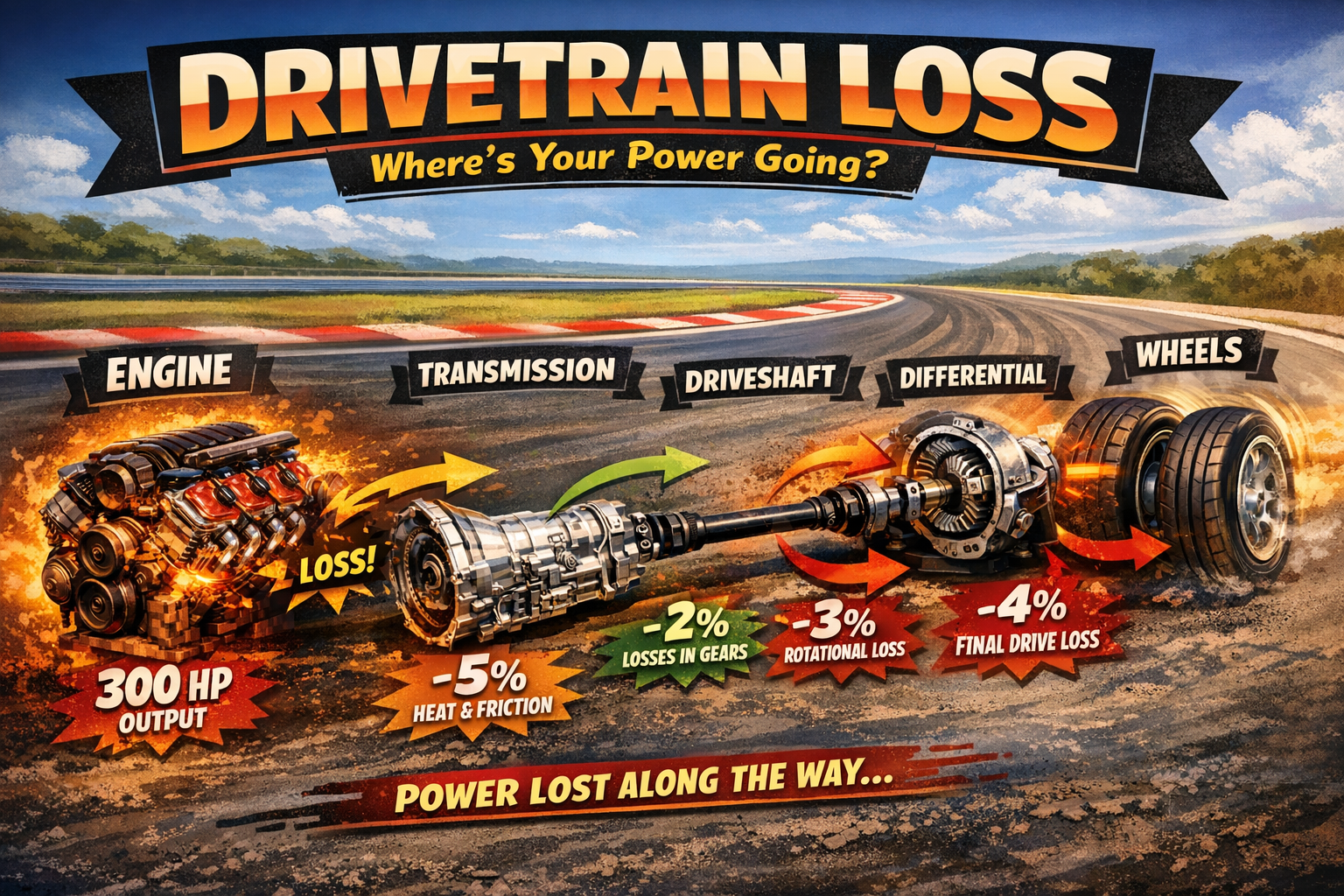
Think of your car like a relay race. The engine creates power, but that power has to travel through multiple components before it reaches the wheels. The crankshaft, transmission, driveshaft, differential, and axles all play a role in delivering that power. Along the way, each of these parts consumes a bit of energy. Not because something is wrong, but simply “because physics”. By the time power reaches your tyres, some of it has already been lost to friction, heat, and rotational resistance. That difference is what we call drivetrain loss.
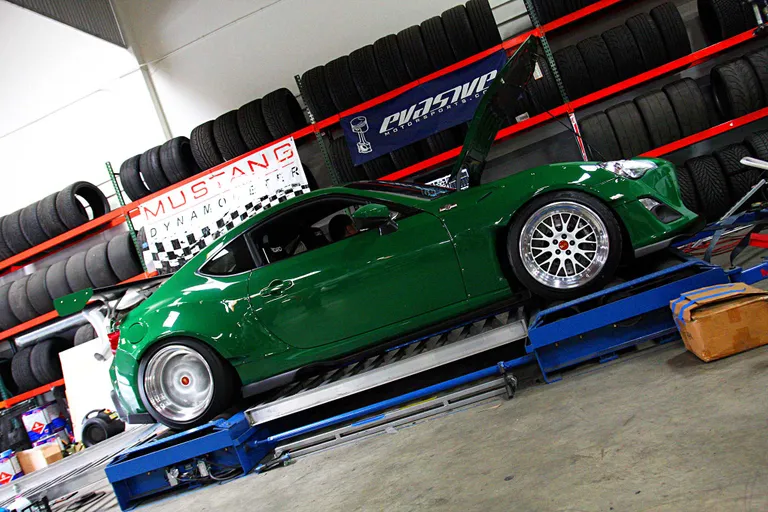
A lot of confusion comes from how power is measured. Manufacturers quote crank horsepower, which is the engine’s output before any losses. Dynos, on the other hand, measure wheel horsepower, which is what actually makes it to the road. That gap between the two is where most debates begin. According to most reports, front-wheel-drive cars lose about 10 to 15 percent of their power, rear-wheel-drive cars around 15 to 20 percent, and all-wheel-drive systems can lose anywhere between 20 to 30 percent. So that 300 horsepower AWD machine might only be putting down around 220 to 240 horsepower at the wheels, but that is pretty outdated news, modern cars and manufacturers have brought transmission loss down,
Things get more interesting when you look at why drivetrain layouts affect these numbers. AWD systems have more moving parts, more shafts, and more differentials, which means more friction and more energy loss. That’s why they often show lower numbers on a dyno compared to simpler setups like RWD. But in return, you get superior grip and stability, especially in real-world conditions. It’s a trade-off between efficiency and capability, and for many drivers, it’s a trade worth making.
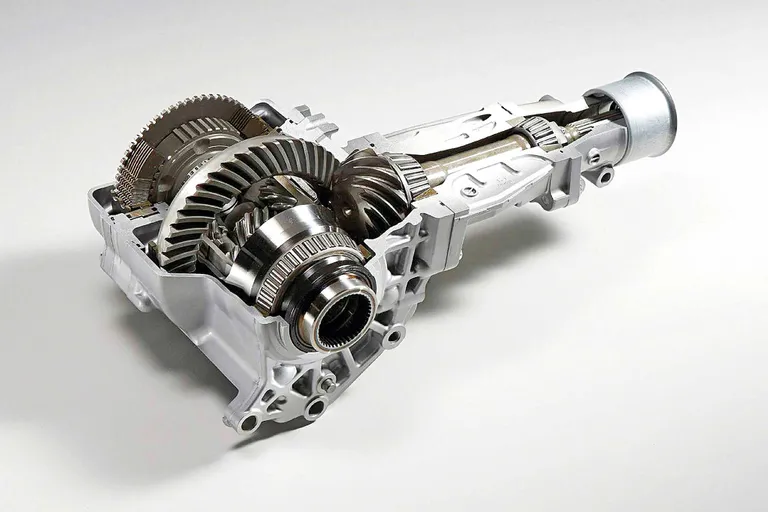
Transmission choice also plays a role. Manual gearboxes typically have lower drivetrain losses because of their simpler mechanical design. Traditional torque converter automatics tend to lose more power, while modern dual-clutch transmissions sit somewhere in between. But the story doesn’t end there. Today’s automatics shift faster and more precisely than most drivers ever could, which means that despite slightly higher losses, they often end up delivering quicker real-world performance.
This is where the dyno debate gets interesting. People love chasing numbers, but drivetrain loss is a reminder that the road doesn’t care about crank horsepower. What really matters is how efficiently that power reaches the wheels, how well your tyres can put it down, and how usable that power feels when you’re behind the wheel. A lighter, more efficient car can often feel quicker than a more powerful one on paper.
Can you reduce drivetrain loss? To an extent, yes. Better lubricants, lighter components, and reduced rotational mass can help improve efficiency slightly. But you’re not going to suddenly unlock massive amounts of hidden power. Drivetrain loss is fundamentally built into the system. It’s simply the cost of converting engine power into motion.
The next time someone tells you their car makes 300 horsepower, it’s worth asking one simple question: is that at the crank or at the wheels? Because once you understand drivetrain loss, you stop obsessing over headline numbers and start appreciating how a car actually performs.
Drivetrain loss isn’t a flaw. It’s a reminder that cars are more than just figures on a spec sheet. They’re about how power is delivered, how it feels, and how it translates to the road. And sometimes, the most fun cars aren’t the ones with the biggest numbers, but the ones that use what they have the best.